
Paint decontamination is the specialized two-phase detailing process—combining targeted chemical dissolvers with lubricated mechanical claying—that removes embedded iron fallout, asphalt tar, hardened tree sap, and mineral deposits that routine hand washing leaves behind. While pH-neutral car soap lifts loose dust and mud sitting on top of automotive clear coat, decontamination safely releases sharp metallic and petroleum particles anchored inside microscopic paint pores.
Vehicle owners driving I-55, MO-51, and county highways around Perryville, Jackson, Ste. Genevieve, and Cape Girardeau regularly wash their trucks and SUVs yet still feel a gritty, sandpaper-like texture across lower doors and rear bumpers. At Cloud 9 Tint Studio and Auto Spa, technicians pair iron fallout removers, citrus tar solvents, mineral-spot treatments, and fine detailing clay to restore glass-smooth clear coat before polishing, waxing, or installing professional ceramic coating.
Why Routine Car Washing Leaves Bonded Contaminants Behind
Routine car washing leaves bonded contaminants behind because pH-neutral wash shampoos are formulated to lubricate and float loose surface soil away gently without dissolving sintered metal, petroleum bitumen, or cured tree resin. Scrubbing harder with a wash mitt against embedded particles never pulls them free cleanly; extra pressure only drags protruding grit across surrounding clear coat and carves fresh swirl marks.
Automotive clear coat looks solid to the naked eye, yet under magnification it contains microscopic valleys that expand in summer sun and contract overnight. Four distinct mechanisms anchor road contaminants past the reach of wash mitts:
- Thermal sintering from hot brake dust: Semi-metallic brake pads shed superheated iron shavings every time vehicles slow down on I-55; hot fragments strike painted doors and rear tailgates, soften the top micron of clear coat, and cool in place like tiny barbs.
- Solvency and heat curing of road tar: Freshly chip-sealed county roads and summer-heated asphalt sling sticky bitumen droplets behind front tires that cure into water-insoluble black specks along rocker panels.
- Resin polymerization from tree sap and bug acids: Oak, pine, and maple sap hardens under UV light into a glassy amber shell that repels soapy water while etching downward into clear coat.
- Mineral crystallization from hard water and winter brine: Calcium, magnesium, and road-treatment salts left behind when rinse water or highway spray evaporates form crusty rings bonded tightly to horizontal panels.
Avoiding self-inflicted wash marring starts with proper two-bucket technique, which we cover in our guide to common car washing mistakes that damage your paint, whereas removing already-bonded grit requires stepping beyond soap into dedicated decontamination.
The Four Bonded Contaminants Hiding on Missouri Vehicles
Four primary contaminant groups—ferrous iron fallout, petroleum road tar, organic sap and bug residue, and alkaline mineral scale—account for nearly all roughness felt on freshly washed vehicles in Southeast Missouri. Identifying each group visually and by panel location tells a detailer exactly which chemical stage comes first.
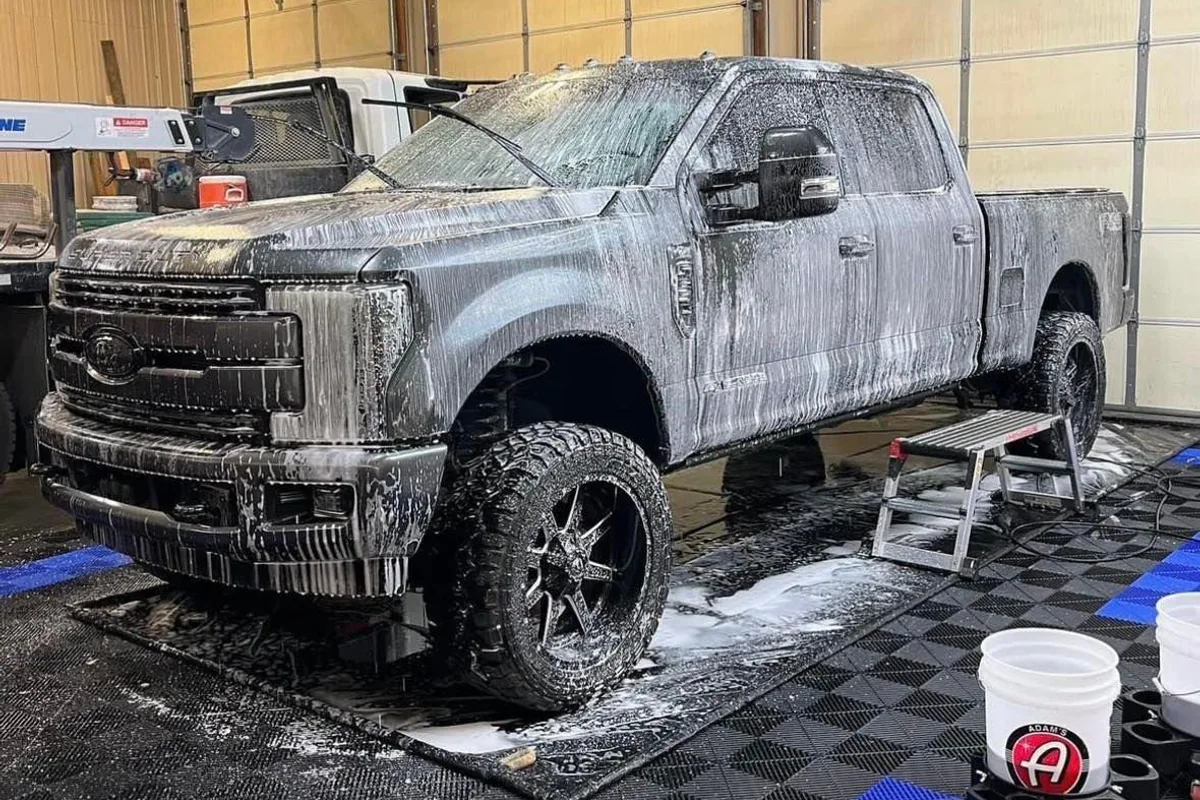
The table below compares how each contaminant looks, feels, and responds to targeted removal chemistry versus ordinary soap.
| Contaminant Type | Visual & Tactile Clues | High-Impact Vehicle Zones | Targeted Removal Method |
|---|---|---|---|
| Iron Fallout & Rail Dust | Pinpoint orange rust specks on white/silver paint; gritty sandpaper feel on dark colors | Rear bumper, tailgate, lower doors behind front wheels, and horizontal hood | pH-neutral thioglycolate iron remover spray that dissolves ferrous particles into water-soluble purple complex |
| Asphalt Tar & Road Oil | Raised black or dark brown dots and streaks that smear if picked with a fingernail | Lower rocker panels, behind wheel arches, lower quarter panels, and exhaust valence | Dedicated tar and adhesive solvent that liquefies petroleum bitumen without dulling clear coat |
| Tree Sap, Pollen Resin & Bug Etching | Sticky or rock-hard amber drops on roof/hood; crusty protein splatter on bumper | Roof, hood, windshield cowl, mirror caps, and front grille surround | Controlled resin solvent or citrus pre-treatment with microfiber blotting—never dry scraping |
| Hard Water & Winter Salt Scale | Chalky white outlines or ring-shaped mineral rims visible after drying | Hood, roof, trunk lid, upper door sills, and exterior glass | Mild acidic water-spot remover neutralizing calcium and magnesium carbonate crust |
Iron Fallout and Tiny Orange Rust Specks
Tiny orange-brown pinpoint dots across white, pearl, and silver pickups are almost never rust coming through the truck’s own sheet metal—even on brand-new plastic bumpers! Those specks are microscopic iron particles from highway brake rotors, snowplow blades, and rail transport dust oxidizing on top of the clear coat. Left untreated through a damp Missouri winter, oxidizing iron expands inside clear-coat pores, dulls reflectivity, and stains light-colored paint.
Chip-Seal Asphalt Tar and Rubber Sling
Fresh highway patching and rural blacktop maintenance around Perry County, Ste. Genevieve, and Fredericktown fling warm tar droplets off tire treads onto lower doors and fender flares. Because tar is oil-based and hydrophobic, water-based car wash soap beads right off it. Dragging a clay bar directly over thick tar blobs smears dark streaks across the panel and ruins the clay instantly, which is why chemical tar dissolution always precedes mechanical claying.
Hardened Tree Sap and Agricultural Overspray
Parking beneath shade trees during humid July afternoons drops sticky sap beads that bake hard within days, while industrial paint mist or agricultural lime dust settles evenly across roofs and hoods. Attempting to chip hardened sap off with a fingernail or scouring pad gouges the surrounding clear coat immediately.
Clearing all four contaminant types safely relies on letting chemistry dissolve the bulk load first so physical tools barely have to touch the paint.
Chemical vs. Mechanical Decontamination: Why Sequence Matters
Professional paint decontamination pairs chemical decontamination first with mechanical clay bar treatment second so harsh ferrous shards and sticky tar dissolve without being dragged across clear coat. Reversing that order—or skipping chemical sprays altogether—forces detailing clay to shear sharp metal fragments loose mechanically, increasing the risk of fine micro-marring.
Stage 1: Contact Wash and Dry Surface Prep
Decontamination always begins with a thorough pre-rinse, foam bath, and two-bucket contact wash to strip loose dirt, mud, and road dust off the exterior. Applying expensive iron remover or tar solvent onto a muddy truck wastes chemical strength on loose dirt that water and soap already handle.
Stage 2: Chemical Iron Fallout Dissolution
Iron decontamination sprays use pH-balanced reactive agents that target ferrous metal specifically without harming clear coat, factory trim, or bare aluminum wheels. Within two to four minutes on cool, shaded panels, clear spray reacts with invisible iron particles and bleeds deep purple as sharp metallic edges shrink and release from the paint pores, rinsing cleanly off with low-pressure water.

Stage 3: Targeted Tar, Sap, and Mineral Removal
Solvent tar removers and mild mineral-scale cleaners break down non-metallic deposits that iron spray ignores. Technicians mist tar remover onto lower rocker panels and behind wheel wells, allow thirty to sixty seconds for black specks to liquefy into brown trails, and wipe gently with a clean plush microfiber towel before rinsing neutralized residue away.
Stage 4: Mechanical Clay Bar or Synthetic Clay Mitt Treatment
Mechanical claying glides a lubricated viscoelastic resin bar or fine synthetic clay towel across wet panels to shear off stubborn above-surface nibs—such as cured overspray, tree-pollen glaze, or mineral grit—that survived chemical sprays. As the clay glides over slick detailing lubricant, protruding particles stick into the softer clay polymer rather than scratching the harder clear coat underneath, leaving the panel glass-smooth to the touch.
Understanding how mechanical clay interacts with clear coat also explains when decontamination should be followed by machine polishing.
Does Claying Require Polishing Afterward?
Mechanical claying removes bonded surface roughness without removing swirls, and on soft or dark paint even fine-grade clay occasionally leaves faint haze that a single-step polish refines to mirror clarity. Chemical decontamination alone causes zero physical contact marring.
Three situations determine which combination fits your vehicle best:
- Routine seasonal refresh on daily drivers: Wash, chemical iron and tar removal, ultra-fine clay, and a durable sealant restore slickness and water beading without heavy correction.
- Pre-polishing and ceramic coating prep: Full chemical and clay decontamination followed by machine polishing removes both embedded grit and wash swirls so ceramic coating bonds directly to clean clear coat.
- Maintenance on existing ceramic coatings or PPF: Periodic chemical iron and water-spot sprays unclog coated pores without dragging abrasive clay across the protective layer.
Testing your own hood and lower doors at home takes less than sixty seconds after your next wash.
The Plastic Baggy Test: Checking Your Paint in 60 Seconds
Vehicle owners test clear coat for invisible bonded contamination right after washing and drying by sliding two fingers inside a thin plastic sandwich bag and gliding lightly across the hood and lower front door. Thin plastic amplifies tactile feedback tenfold compared with bare fingertips, turning microscopic iron and sap bumps into unmistakable grit.
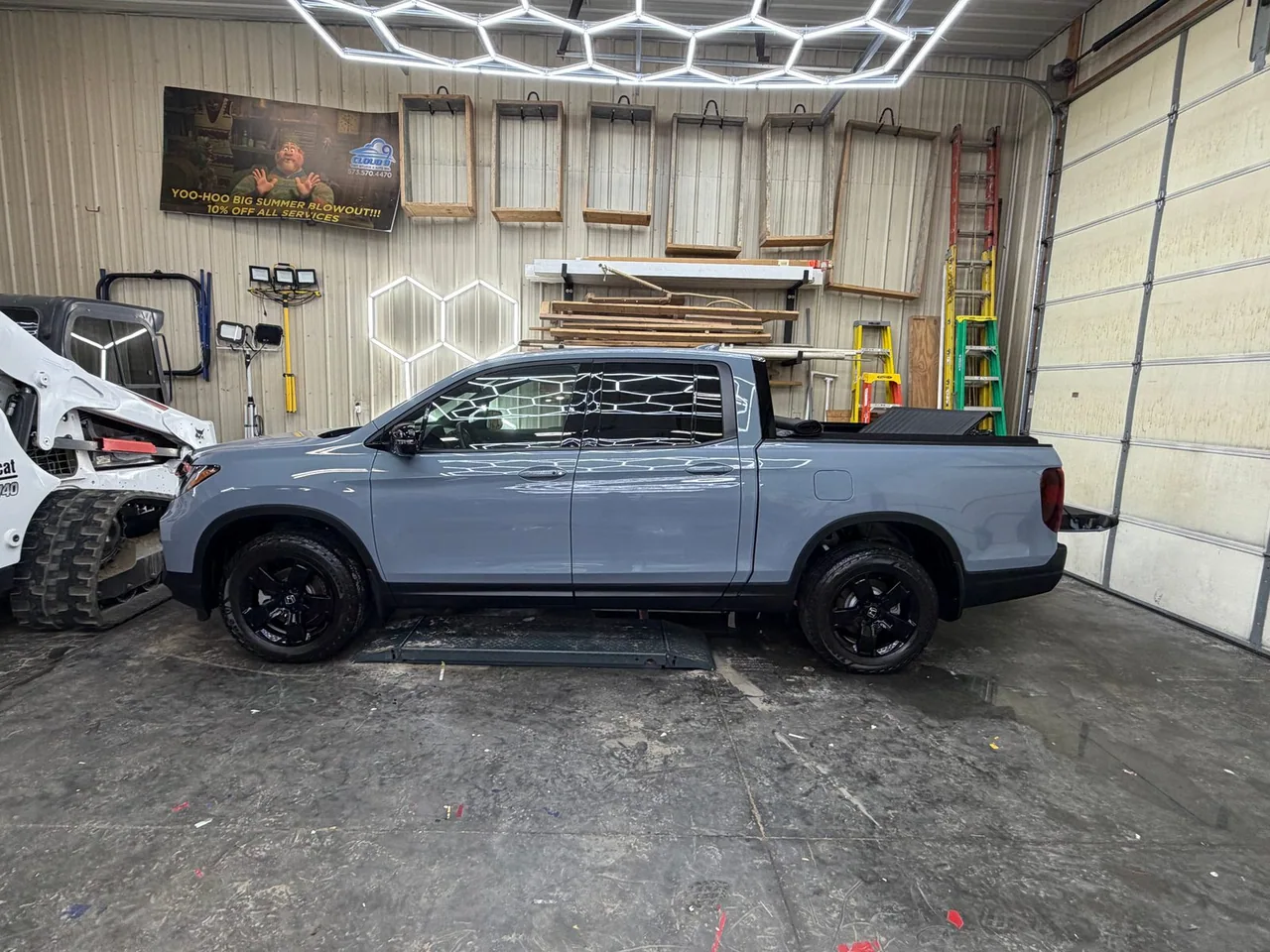
Check three distinct exterior zones during that test to gauge severity:
- Center of the hood and roof: Roughness here comes mainly from tree mist, industrial fallout, pollen resin, and mineral water spots.
- Lower front doors behind the front tires: Heavy roughness here combines asphalt tar sling with front-brake iron dust.
- Flat rear tailgate or bumper shelf: Rear air turbulence swirls exhaust soot and ferrous brake dust directly onto the tailgate.
Never rub clay across unwashed paint or in direct sun, and discard any clay bar immediately if it drops onto concrete or gravel.
Schedule Paint Decontamination and Detailing in Perryville, MO
Freshly washed paint that still looks flat, feels rough to the touch, or shows tiny orange specks across white and silver panels signals embedded contamination ready for Cloud 9 Tint Studio and Auto Spa to inspect under shop lighting. Visit our studio at 111 S West St in Perryville, MO, call 573-570-4470, or reach out through our contact page to schedule exterior detailing, paint correction, or ceramic coating prep.
Frequently Asked Questions
How can I tell if my car needs paint decontamination?
Wash and dry a panel, slip your fingers inside a thin plastic sandwich bag, and glide lightly across the hood and lower doors. If the paint feels like fine sandpaper instead of smooth glass, bonded contaminants are embedded in the clear coat.
What turns purple when an iron remover is sprayed on car paint?
Active ingredients in pH-neutral iron fallout removers react chemically with ferrous brake-dust particles, shrinking and dissolving the sharp metal edges while turning deep purple or magenta so they rinse away safely without scrubbing.
Does clay bar treatment scratch clear coat?
Detailing clay is a mild mechanical abrasive that occasionally leaves faint micro-marring on soft or dark clear coats when heavy contamination is present. Using chemical iron and tar removers beforehand plus generous clay lubricant minimizes marring, and light machine polishing afterward restores peak gloss.
How often does a daily driver in Missouri need paint decontamination?
Most daily drivers around Perryville and I-55 benefit from full chemical and mechanical decontamination once or twice a year—typically in spring after winter road treatment and in autumn before applying fresh winter protection.
Should paint decontamination be done before waxing or ceramic coating?
Decontamination is mandatory before applying wax, paint sealant, paint protection film, or ceramic coating. Protective products bond directly to clean clear coat; applying them over iron particles and tar traps grit underneath and shortens durability.