
Washing a car seems simple enough: soap, water, a rinse, and a dry. But a surprising amount of the swirl marks, dullness, and fine scratching people notice on their vehicle’s paint over time doesn’t come from road debris or age. It comes from the washing process itself, done in ways that feel routine but are actually working against the paint rather than protecting it.
None of the habits below are dramatic or obviously wrong in the moment. That’s part of why they’re so common: they don’t cause visible damage on any single wash, only as it accumulates over months and years.
Why Washing Technique Matters More Than People Expect
Paint is more vulnerable to fine abrasion than most people assume. Dirt, dust, and grit sitting on the surface act like sandpaper the moment something drags across them, including a wash mitt, a sponge, or the soft-looking strips in an automatic car wash.
The damage from this is usually too fine to notice up close, but it shows up as a dull, hazy, or “spider-webbed” look under direct sunlight, often mistaken for paint that’s simply old, when the underlying cause is actually years of washing technique.
Common Mistakes That Cause the Most Damage
Using the Wrong Soap
Dish soap, household degreasers, and all-purpose cleaners are sometimes used because they’re already on hand, but they’re formulated to strip oils and wax rather than preserve them. Repeated use can leave paint more exposed and less protected between washes than a dedicated car wash soap would.
Washing in Direct Sunlight or on a Hot Surface
Washing a car when the surface is hot, whether from direct sun or a recent drive, causes soap and water to dry faster than intended. Fast-drying soap is more likely to leave mineral spots and streaking behind, and can make the whole process less effective even though it looks the same in the moment.
One Bucket, One Mitt, Every Panel
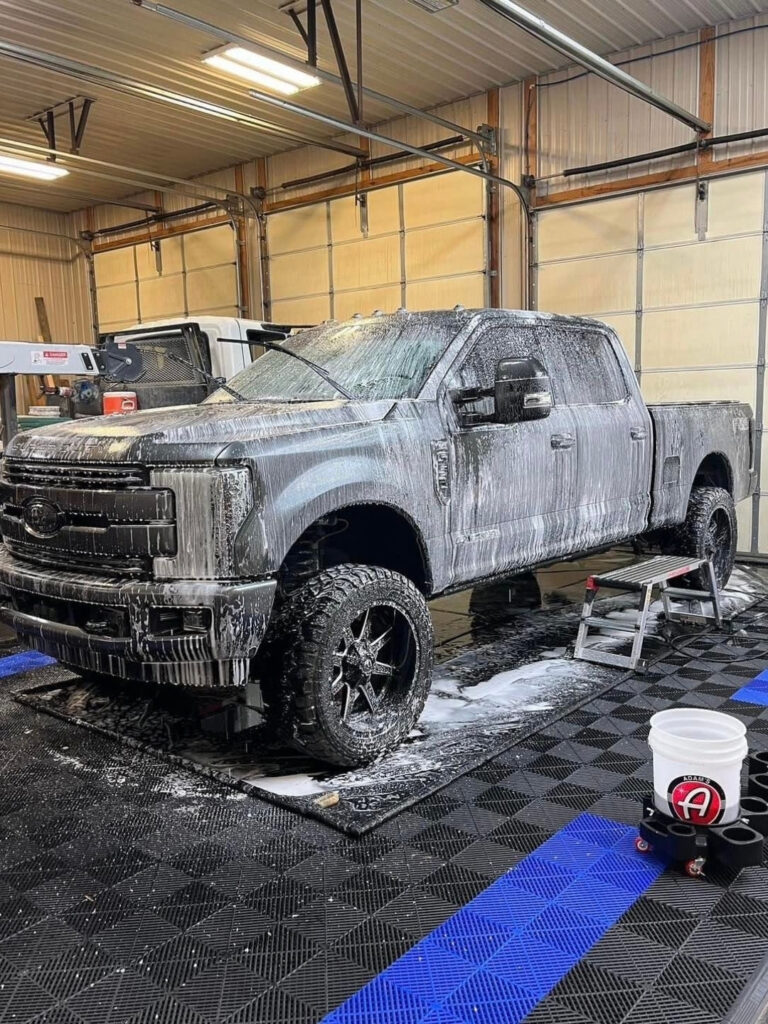
Using a single bucket and wash mitt for the entire vehicle, including the wheels, is one of the most common sources of fine scratching. Wheels collect brake dust and road grit that’s more abrasive than what settles on painted panels, so once that grit transfers into a wash mitt, every subsequent panel gets dragged across it. A separate bucket and mitt for wheels, used before the rest of the vehicle, avoids this entirely.
Automatic and Brush Car Washes
Automated washes with rotating brushes are convenient, but the same brushes touch every vehicle that comes through, picking up grit along the way. Touchless automatic washes avoid the physical contact issue but rely more heavily on chemical cleaners, which come with their own tradeoffs. Neither is inherently ruinous for occasional use, but frequent reliance on brush washes in particular is one of the more common causes of the fine swirl marks people notice under bright light.
Drying the Wrong Way
Letting a car air-dry, or wiping it down with a regular bath towel, tends to leave both water spots and light scratching behind. Water that dries on its own often leaves mineral deposits, and standard towel fibers are coarser than they feel, which can drag grit across the surface in the same way a dirty wash mitt does.
What Good Washing Habits Actually Look Like
None of this requires professional-grade equipment to get mostly right. A few adjustments make a meaningful difference:
- Washing in the shade or during cooler parts of the day, not in direct sun on a hot surface
- Using a dedicated car wash soap rather than household cleaners
- Keeping a separate bucket and mitt for wheels, done first, before the rest of the vehicle
- Rinsing thoroughly before applying soap, to lift loose grit off the surface first
- Drying with a clean microfiber towel rather than air-drying or using a standard towel
These habits won’t eliminate wear entirely; normal driving in Perryville, MO, still exposes paint to sun, debris, and environmental contaminants, but they remove a layer of self-inflicted damage that’s easy to avoid once you know what to look for.
Tools and Products That Make a Bigger Difference Than People Expect
The equipment used during a wash matters almost as much as the technique itself. A few worn-out or poorly chosen items are common culprits behind avoidable damage:
- Wash mitts and sponges that have hardened or picked up grit: A mitt that’s been dropped on the driveway or left to dry with dirt still in the fibers can turn into an abrasive tool the next time it’s used, regardless of how carefully it’s handled.
- Grit guards in wash buckets: A simple insert that keeps heavier dirt particles settled at the bottom of the bucket, away from where the mitt gets re-dipped, reduces how much grit gets reintroduced to the paint mid-wash.
- pH-neutral soap versus stripping cleaners: Soaps formulated for automotive paint are designed to lift dirt without aggressively stripping existing wax or sealant, which household cleaners and degreasers are not built to preserve.
- Microfiber wash mitts versus natural sponges: Sponges tend to trap grit against their surface rather than lifting it away, while a quality microfiber mitt is designed to hold contaminants in its fibers, away from the paint surface during the next pass.
None of this requires an elaborate setup, but it does mean that even a well-intentioned washing routine can still cause damage if the tools involved are worn out, dirty, or simply not suited to the job.
Common “Fixes” That Make Things Worse
When people notice dullness or light scratching, it’s tempting to try to correct it without professional help, but a few common at-home remedies tend to compound the problem rather than solve it:
- Using household abrasive cleaners or “magic eraser” style pads on paint: These are designed for hard, non-clearcoat surfaces and can leave noticeable scratching behind almost immediately.
- Excessive polishing without the right technique or products: Polishing removes a microscopically thin layer of clearcoat to level out scratches, and doing it repeatedly or aggressively by hand can thin the clearcoat over time rather than genuinely correct the issue.
- Skipping a proper rinse before hand-polishing or waxing: Working wax or polish over paint that hasn’t been thoroughly rinsed can grind any remaining grit directly into the surface rather than buffing it out.
- Assuming a car wash membership solves everything: Frequent visits to a low-cost automatic wash can mean more frequent exposure to the very brushes and cross-contamination risks discussed above, rather than less.
If a vehicle’s paint already shows noticeable wear, a professional assessment from a team specializing in auto detailing is usually a safer starting point than trial-and-error correction at home, since the wrong approach can turn a manageable issue into a more expensive one.
When Contaminants Build Up Faster Than Washing Alone Can Handle
Washing habits are only part of the picture. How often a vehicle needs attention also shifts with the season, since road treatment, pollen, tree sap, and temperature swings all affect how quickly contaminants build up and how they interact with paint. If your current routine hasn’t been adjusted for the time of year, learning how to adjust your routine with the seasons covers what tends to change and when it’s worth paying closer attention.
If You Have Paint Protection Film, Washing Technique Matters Even More
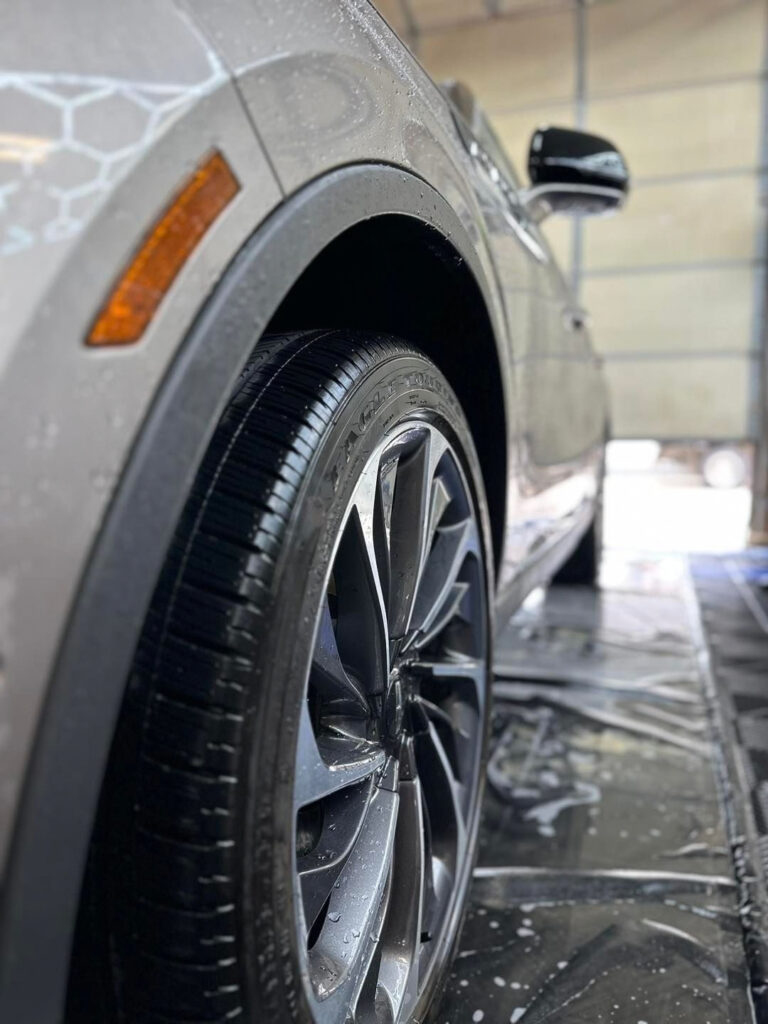
Vehicles protected by paint protection film aren’t immune to the same washing mistakes, and in some cases the margin for error is smaller, since improper washing can affect how film edges and seams hold up over time. If your vehicle has film installed, it’s worth understanding the specifics of caring for your vehicle after installation rather than assuming the same routine you’d use on bare paint applies without any adjustment.
Signs Your Paint Already Has Wash-Induced Damage
A few signs suggest washing technique, rather than just age or general wear, may be a factor:
- Fine, web-like scratching visible mainly under direct or angled sunlight
- A duller, less reflective finish compared to how the vehicle looked when new
- Visible circular or swirling patterns, especially on darker paint colors where they show up most
- Water spots that don’t wipe away easily after washing
None of these are usually urgent, but they’re worth noting, since they tend to get more pronounced over time rather than resolve on their own.
A Simple Wash Routine Checklist
Step | Why It Matters |
Wash in shade, on a cool surface | Prevents fast-drying soap and water spotting |
Rinse before applying soap | Lifts loose grit before it can be dragged across paint |
Separate bucket and mitt for wheels | Keeps abrasive brake dust away from painted panels |
Use a dedicated car wash soap | Preserves existing wax or sealant rather than stripping it |
Dry with a clean microfiber towel | Reduces both water spotting and fine scratching |
When It’s Time to Bring in a Professional
If your paint already shows signs of accumulated wash damage, or you’d rather have a consistent, correct routine handled for you, Cloud 9 Tint Studio and Auto Spa in Perryville, MO, can assess the current condition and recommend what’s worth prioritizing based on how the vehicle actually looks, rather than guesswork.
Frequently Asked Questions
Can washing mistakes really cause noticeable damage over time?
Yes. The effect is usually gradual rather than sudden, which is why it’s often mistaken for normal aging rather than a result of technique. Results vary by vehicle, paint color, and washing frequency.
Is it bad to wash my car at a touchless automatic car wash?
It’s generally gentler than a brush wash since there’s no direct physical contact, though it relies more on chemical cleaners, which come with their own considerations. Occasional use is unlikely to cause significant issues either way.
Do swirl marks go away on their own?
No. Fine swirl marks are a form of surface wear and don’t resolve without polishing or correction work. They also tend to become more noticeable over time as more washes add to them.
How often should I wash my car?
This depends heavily on your driving conditions, local environment, and the season, so there’s no single answer that fits every vehicle. A seasonally adjusted routine tends to serve most owners better than a fixed schedule.
Does it matter what kind of towel I use to dry my car?
Yes. A clean, soft microfiber towel is generally gentler than a standard bath towel or paper-based product, both of which can be coarser than they appear and more likely to leave light scratching behind.
Wondering If Your Paint Needs Attention?
If you’re noticing dullness, swirl marks, or water spots that a routine wash isn’t resolving, contact Cloud 9 Tint Studio and Auto Spa at 573-570-4470 to talk through what’s going on and whether a professional detail makes sense for your vehicle.