
There’s no single interval that fits every boat. How often a boat should receive routine cleaning and professional detailing depends on usage, storage conditions, water environment, existing surface condition, season, and how much maintenance the owner is already doing between professional visits. A boat used every weekend all summer needs a very different rhythm than one that sits covered in storage for most of the year.
Here’s how to actually build a maintenance schedule around your boat’s real conditions, rather than guessing at a generic number.
Why Frequency Depends on Real Factors, Not a Fixed Schedule
A boat’s exterior surfaces — gelcoat, glass, chrome, and vinyl — respond differently to sun, water exposure, and storage than a car’s paint does, and the factors that drive wear vary more from one boat to the next than they typically do between cars. Usage frequency, whether the boat is stored covered or uncovered, and the specific water environment it operates in all genuinely affect how often professional attention makes sense — treating every boat the same regardless of these factors tends to produce either wasted spending or neglected maintenance.
Marine Detailing vs. Ordinary Cleaning
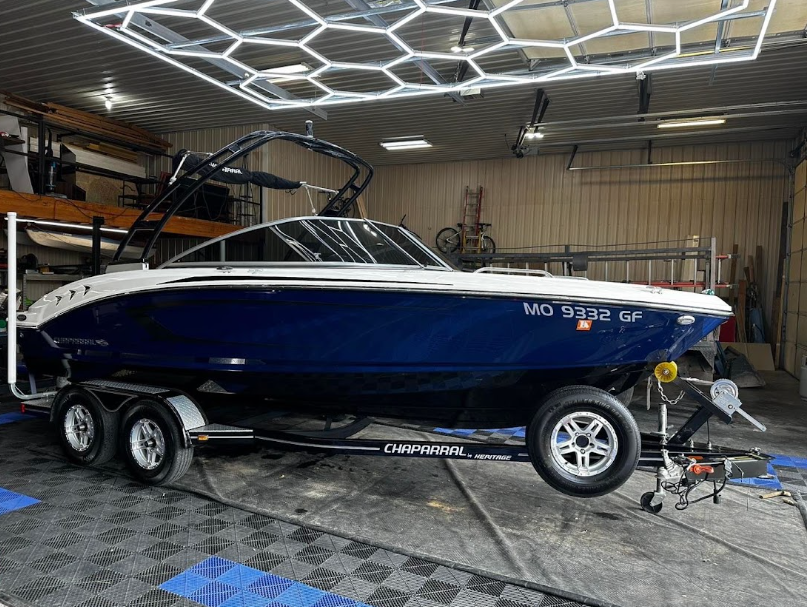
Marine detailing goes beyond a basic rinse or wipe-down. Cloud 9 Tint Studio & Auto Spa’s own real boat detailing packages illustrate the difference directly: the entry-level “Opening Weekend” package includes a pressure wash, hand wash, interior vinyl and leather reconditioning, glass and chrome cleaning, vacuuming, and compartment cleaning — priced by linear foot of the boat. The more comprehensive “Captain’s Call” package adds a 6-month gel coat sealant and carpet shampooing on top of that same base scope. Neither is a substitute for regular owner-level rinsing between professional visits; they’re a more thorough reset that a quick hose-down doesn’t accomplish.
How Usage Affects Frequency
A boat used frequently throughout the season accumulates waterline contamination, UV exposure, and general wear faster than one used only occasionally. More frequent use generally supports more frequent inspection and cleaning, simply because there’s more real exposure to address between visits. This doesn’t mean a heavily used boat needs professional detailing after every outing — it means the reasonable interval between more thorough services should be shorter than it would be for a boat that rarely leaves the dock.
How Storage Affects Frequency
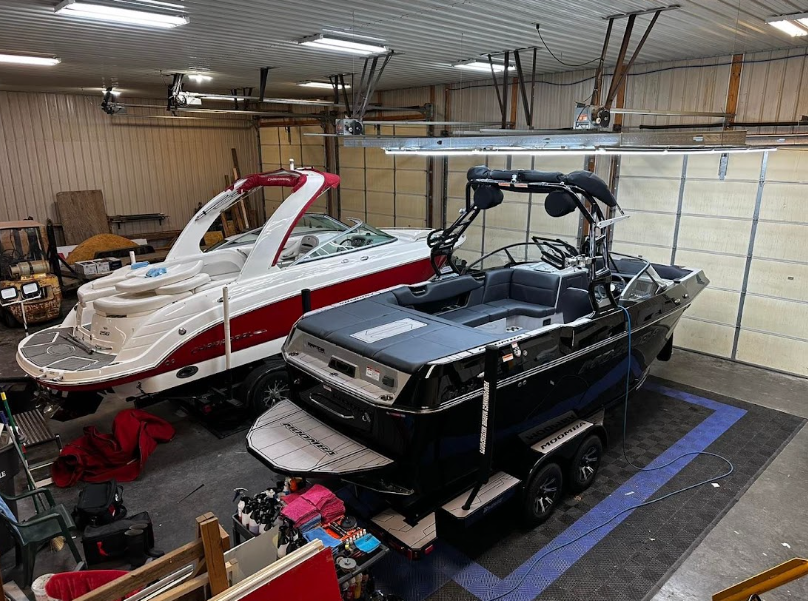
Storage conditions matter as much as usage. A boat stored outdoors and uncovered faces continuous sun and weather exposure even when it’s not being used at all, while a covered or indoor-stored boat sees considerably less of that exposure — though storage doesn’t eliminate contamination entirely, since dust and general settling still occur even under cover. A boat that sits uncovered for months between uses may need more attention at the start of a season than one that was properly covered the entire time.
Boat Usage, Storage, and Maintenance Considerations
| Boat Usage / Condition | Maintenance Consideration | Why |
|---|---|---|
| Frequently used boat | More frequent inspection and cleaning | Greater real exposure to water, sun, and contamination |
| Stored outdoors, uncovered | Exposure management matters more | Continuous environmental contamination even when not in use |
| Covered or indoor-stored | Still requires periodic inspection | Storage reduces but doesn’t eliminate contamination |
| Visible oxidation on gelcoat | Professional evaluation may be appropriate | Routine cleaning alone may not address oxidation that’s already set in |
| Heavy water spotting | Evaluate surface condition | Mineral deposits can become more difficult to address the longer they’re left |
| Seasonal boat | Pre-season and end-of-season care may be useful | Long storage periods change what maintenance actually needs to happen |
Freshwater vs. Saltwater Exposure
Generally speaking, saltwater environments introduce mineral and salt residue that freshwater use doesn’t, which can affect how quickly contamination builds up on exterior surfaces and hardware. This doesn’t mean freshwater boats need no attention — it means the specific contamination profile differs, and a boat’s actual operating environment is worth factoring into how a maintenance schedule gets built.
Gelcoat Condition and Oxidation
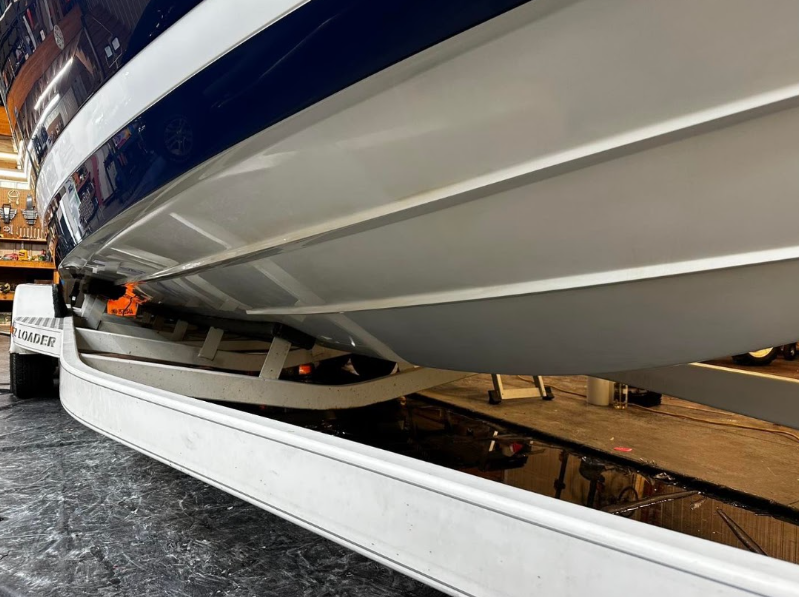
Gelcoat that’s begun oxidizing — showing a chalky, faded appearance rather than a glossy one — generally needs more than routine cleaning to address. Cloud 9’s own Silver and Gold boat ceramic coating packages both include a two-step exterior compound and polish process specifically described as removing oxidation and restoring color, which reflects how real marine ceramic coating work is typically structured: a compounding step to address existing oxidation, followed by a protective coating to help slow its return.
Real Protective Coating Options Worth Knowing About
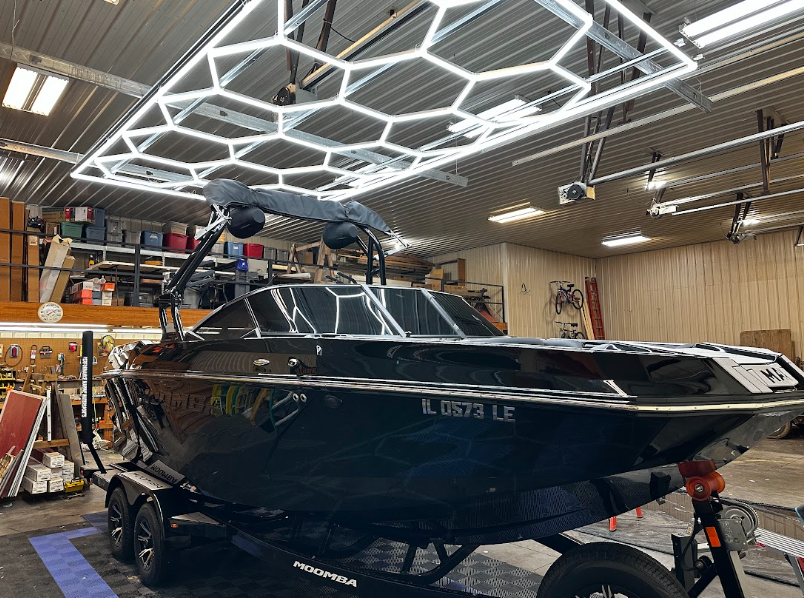
Cloud 9 Tint Studio & Auto Spa offers marine ceramic coating using XPEL Marine, structured across Bronze, Silver, and Gold tiers with 1-year, 2-year, and 3-year exterior coating durations respectively — the higher tiers also add glass coating with its own separate warranty. This is directly relevant to a frequency discussion, since a properly coated hull needs less frequent detailing to maintain its appearance than an uncoated one facing the same usage and storage conditions.
Seasonal Preparation: Pre-Season and End-of-Season Care
Boats that see genuinely seasonal use benefit from attention at both ends of the season. Pre-season care addresses whatever accumulated during storage before the boat goes back on the water. End-of-season care addresses the accumulated effects of a full season of use before extended storage begins — skipping this step tends to mean that whatever contamination built up over the season sits untreated for months, making it considerably harder to address when the boat comes back out the following year.
Why Neglect Makes Restoration More Difficult
Contamination and oxidation that go unaddressed for extended periods tend to become progressively harder to correct. A boat with early-stage gelcoat oxidation typically responds better to a compounding and polishing process than one that’s been left oxidized for multiple seasons, where the damage may be more extensive and correction less complete. Staying ahead of visible changes tends to cost less overall than waiting until a problem is severe enough to be obvious from a distance.
Resale and Value Considerations
A well-maintained boat with a documented care history generally presents better to a potential buyer than one with visible neglect, though maintenance alone doesn’t guarantee a specific resale outcome — value depends on many factors beyond appearance. Consistent care is still a reasonable, defensible approach for owners who want to keep their options open for resale down the line, without treating it as a guaranteed return on investment.
Building a Realistic Maintenance Schedule
Rather than committing to a fixed interval, it’s more useful to periodically check: does the gelcoat still look glossy, or is it starting to look chalky? Is water beading and running off, or sitting and spotting? Has the boat been through a full season of heavy use, or has it mostly sat in storage? Honest answers to these questions, checked periodically throughout ownership, tend to produce a far more useful maintenance rhythm than following a generic number that ignores how your specific boat actually gets used and stored.
For more on how consistent detailing relates to protecting a boat’s overall value over time, see how marine detailing helps protect boat value. For owners handling some maintenance themselves between professional visits, see the right boat detailing tools for what that ongoing care actually involves.
Frequently Asked Questions
How often should a boat be professionally detailed?
It depends on usage, storage, and condition rather than a fixed number. A frequently used, outdoor-stored boat generally benefits from more frequent attention than one used occasionally and stored covered or indoors.
How often should you clean a boat?
Routine rinsing and light cleaning is reasonable after most outings, particularly in saltwater. Professional detailing on top of that routine care is what addresses deeper contamination, gelcoat oxidation, and interior surfaces that a quick rinse doesn’t reach.
Does boat storage affect detailing frequency?
Yes. Outdoor, uncovered storage exposes a boat to continuous sun and weather even when it’s not in use, which can shorten the reasonable interval between professional visits compared to covered or indoor storage.
Can boat detailing help with oxidation?
Professional detailing that includes a compounding and polishing step can meaningfully improve early-stage gelcoat oxidation. More advanced oxidation may respond less completely, which is part of why addressing it earlier tends to produce better results.
What’s the difference between washing and detailing a boat?
Washing addresses surface-level dirt. Detailing goes further, addressing embedded contamination, interior surfaces like vinyl and carpet, and — where needed — gelcoat correction that a routine wash doesn’t reach.
Should a boat be detailed before storage?
Generally, yes, particularly at the end of a usage season. Addressing accumulated contamination before extended storage tends to produce an easier start to the following season than leaving that buildup untreated over the winter.
What factors make a boat need detailing more often?
Frequent use, uncovered outdoor storage, saltwater exposure, and visible gelcoat wear all tend to shorten the reasonable interval between professional detailing visits compared to a boat with less of each factor.