
Matte PPF and gloss paint protection film deliver identical physical impact resistance against highway rock chips and road rash because both finishes rely on an optically stable thermoplastic polyurethane core, differing only in how their elastomeric topcoat reflects or diffuses incoming light. Choosing between a mirror-like gloss finish and a satin stealth finish comes down to desired styling, whether you plan partial front coverage or a full-body wrap, edge-wrapping complexity, and long-term wash product discipline.
Drivers visiting Cloud 9 Tint Studio and Auto Spa for paint protection film in Perryville, MO often assume satin-finished cars require expensive factory matte paint or fragile vinyl wraps. Modern urethane film lets owners across Perryville, Cape Girardeau, Jackson, and Ste. Genevieve either preserve factory showroom depth invisibly with gloss PPF or transform standard gloss paint into a uniform satin finish—all while keeping removable stone-chip armor over the factory clear coat.
Do Gloss and Matte PPF Protect Paint Equally?
Gloss and matte paint protection films provide the exact same stone-chip, bug-acid, and abrasion defense when comparing equivalent film lines from the same manufacturer, because impact energy is absorbed by the urethane base layer rather than the surface sheen. Both options sit far thicker than vinyl wraps or liquid coatings, cushioning clear coat against gravel kicked up by trucks along I-55 and rural Missouri highways.
Three structural layers work together inside both gloss and satin urethane films:
- Acrylic pressure-sensitive adhesive: Bonds securely to prepped clear coat while allowing clean, residue-free professional removal years later without pulling factory paint.
- Aliphatic thermoplastic polyurethane (TPU) core: Supplies elasticity and puncture resistance—typically around 8 mils thick on standard automotive films—absorbing sharp stone impacts before they fracture brittle paint.
- Self-healing elastomeric topcoat: Resists UV yellowing, sheds road grime, and recovers from fine surface marks under warm sunlight or warm water; smooth in gloss film for specular reflection, or microscopically textured in matte film for soft light diffusion.
If you are still sorting out realistic expectations around film durability, yellowing resistance, and impact limits regardless of sheen, read our breakdown of common myths about paint protection film first. Once you know PPF fits your driving risks, finish selection becomes a practical design and coverage decision.
Side-by-Side Comparison: Gloss PPF vs. Matte (Stealth) PPF
Gloss PPF maximizes wet-look color depth and blends invisibly on partial-panel installs, whereas matte PPF mutes harsh glare to accentuate sharp body creases across full-vehicle wraps or factory satin paint. Reviewing every practical difference side by side prevents costly regrets after installation.
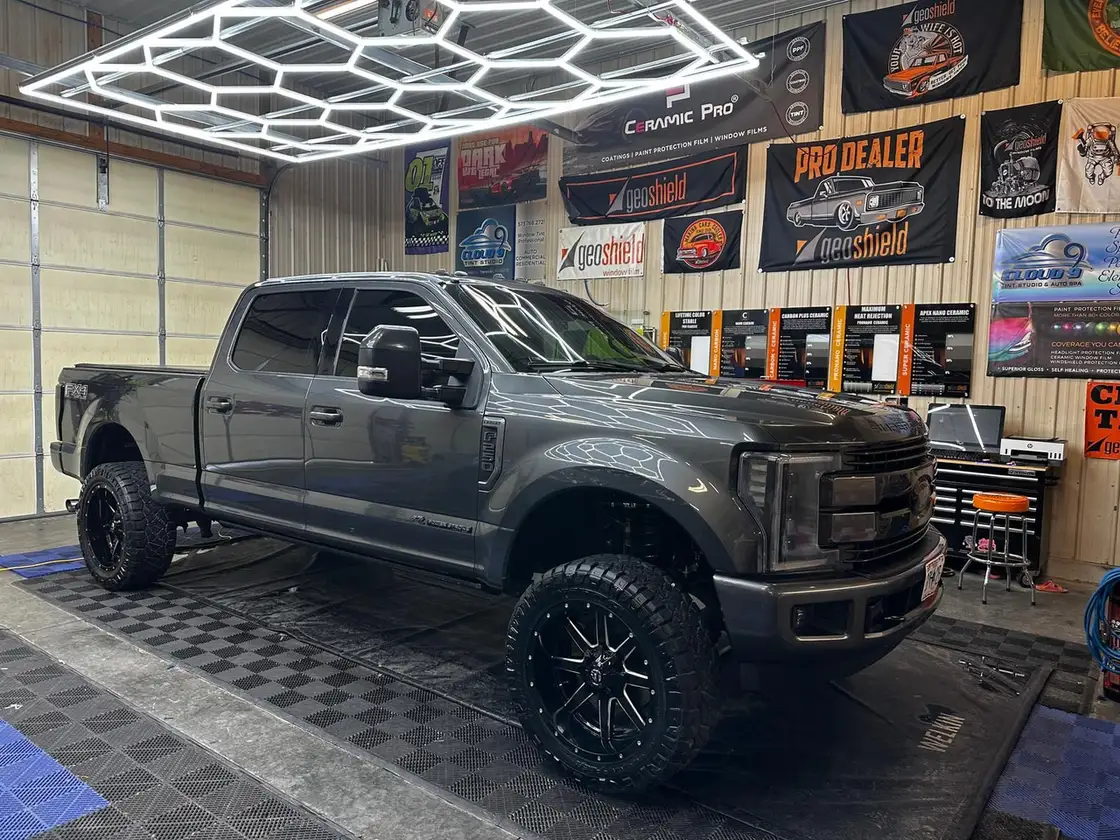
The comparison table below contrasts gloss and matte urethane film across optics, coverage flexibility, edge installation, and maintenance.
| Comparison Factor | Gloss Paint Protection Film | Matte / Satin Paint Protection Film |
|---|---|---|
| Visual Appearance | Deep, mirror-like wet shine matching or enhancing factory clear coat | Silky, non-reflective satin finish that highlights sculpted body lines |
| Partial Coverage Compatibility | Excellent; blends seamlessly on front bumper, hood, fenders, and mirrors | Poor on glossy cars (creates obvious sheen mismatch unless used as hood accent) |
| Factory Matte Paint Match | Changes matte paint to glossy (avoid on factory satin finishes) | Essential; only way to protect factory matte paint without altering its sheen |
| Installation Edge Requirements | Forgiving on relieved edges along complex trim | Requires wrapped edges wherever possible so glossy paint lines never peek through |
| Swirl & Fingerprint Visibility | Shows dust and light wash marks more readily on jet-black paint | Hides minor dust and fine marks well, but shows greasy handprints until washed |
| Polishing & Waxing Rules | Compatible with PPF-safe non-abrasive sealants and ceramic coatings | Zero abrasive polish or carnauba wax allowed; requires matte-safe cleaners only |
How Gloss PPF Enhances Metallic Flake and Solid Colors
Gloss PPF acts like an extra crystal-clear lens over factory clear coat, letting sunlight pass straight down to metallic aluminum or pearl mica flakes and bounce cleanly back to the eye. On sports cars, dark pickups, and pearl-white SUVs, quality gloss film preserves the exact showroom look the manufacturer intended—making it nearly impossible for onlookers to tell which panels are filmed once edges are tucked cleanly.
How Matte PPF Transforms Standard Gloss Paint Into Satin
Applying matte PPF directly over ordinary glossy factory paint diffuses surface reflections without hiding the underlying pigment. Dark gray, black, navy blue, British racing green, and silver metallics take on a dramatic, machined-metal satin character where hood ribs, flared fenders, and shoulder creases stand out sharply even under overcast Missouri skies. Best of all, the conversion is non-permanent: if you ever sell the vehicle, removing the matte film reveals untouched factory gloss paint underneath.
Because matte film alters sheen so noticeably, your intended coverage scope plays a decisive role in which finish makes sense.
Why Coverage Scope Often Decides Between Gloss and Matte
Coverage scope separates gloss and matte buyers immediately because partial front protection packages blend naturally only when film sheen matches the unwrapped doors and rear quarters. Drivers who want targeted highway rock-chip armor on high-impact zones almost always choose gloss film unless their vehicle came from the factory with satin paint.
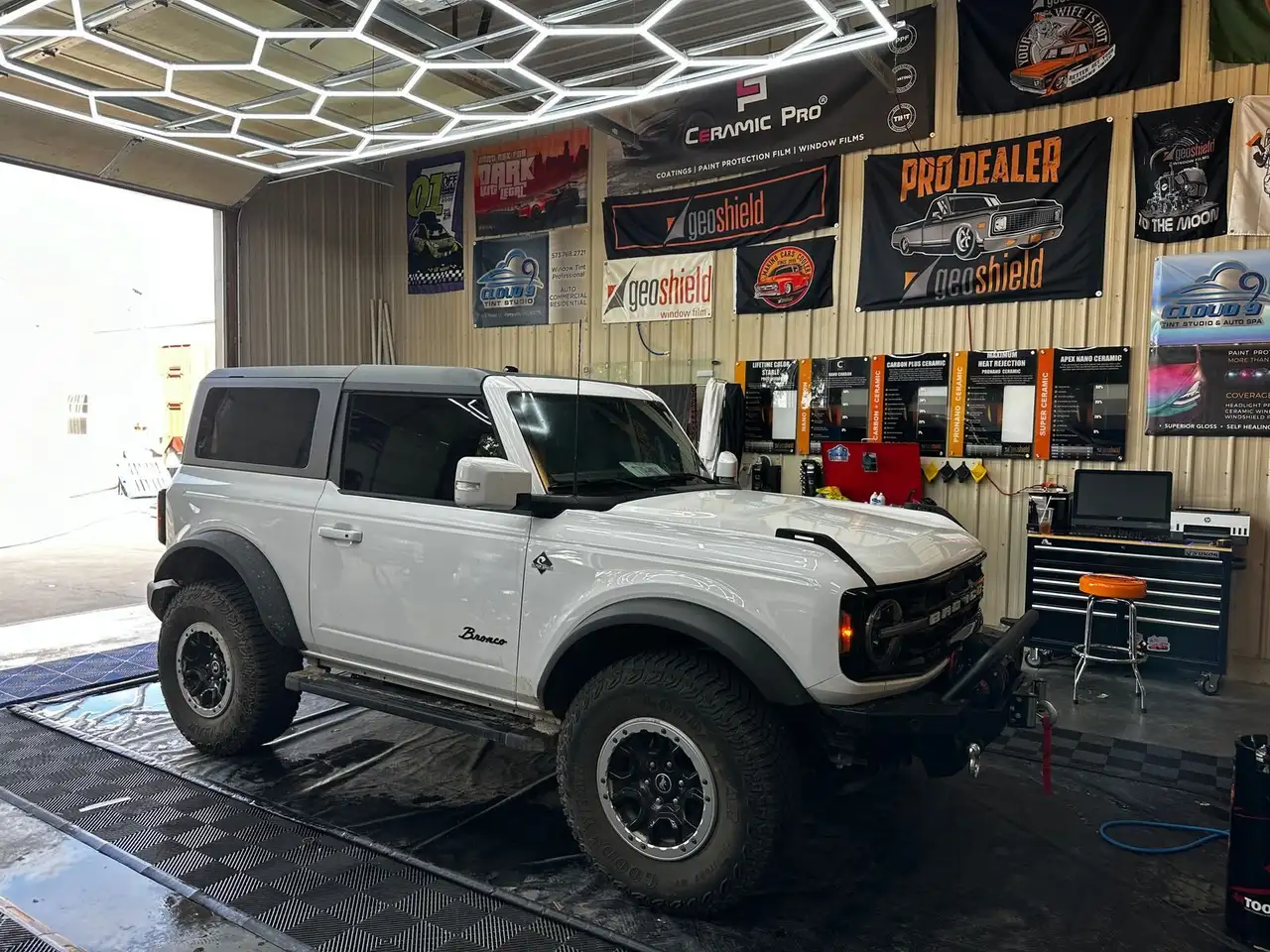
Four real-world coverage pairings work cleanly without awkward visual breaks:
- Partial or Full-Front Gloss PPF on Glossy Vehicles: Covering the front bumper, hood, front fenders, headlights, and mirror caps in gloss film matches the factory doors seamlessly while stopping gravel rash where 90 percent of highway impacts hit.
- Full-Body Gloss PPF for Maximum Showroom Preservation: Wrapping every painted exterior panel in gloss film delivers uniform optical clarity, zero exposed transition lines, and simplified washing from bumper to bumper.
- Full-Body Matte PPF for a Complete Satin Restyle: Wrapping every painted panel—including door handles, rocker panels, and A-pillars—in matte film achieves a cohesive factory-stealth appearance while armoring the entire exterior.
- Intentional Matte Hood or Roof Accents on Off-Road Trucks: Applying matte PPF selectively to a center hood bulge, full hood, or contrasting roof panel on a Bronco, Tacoma, or heavy-duty pickup cuts hood sun glare on trails while looking purposeful rather than unfinished.
Full-body matte conversions also demand tighter installation tolerances: installers disassemble badges, trim pieces, or lamp surrounds where needed and wrap film around panel perimeters so tiny slivers of shiny clear coat do not glint along panel gaps.
Protecting Factory Matte Paint vs. Vinyl Satin Wraps
Vehicles ordered from the manufacturer with factory matte or frozen clear coat benefit enormously from matte PPF because bare matte paint cannot be machine-polished if scratched by a rock, tree branch, or careless wash mitt. Buffing a scratch on bare factory matte paint polishes a permanent shiny spot into the panel, forcing body shops to repaint entire sides of the vehicle to match sheen.
Shoppers restyling glossy cars also frequently ask how matte PPF compares against colored satin vinyl wraps. While vinyl offers hundreds of color shifts at a lower material thickness, vinyl lacks self-healing urethane resilience, tears more easily under Southeast Missouri highway gravel, and carries a shorter outdoor UV lifespan. Matte PPF keeps your original factory paint color visible while adding true stone-chip protection and self-healing topcoat chemistry.
Panel-by-panel serviceability is another major advantage when driving gravel-heavy county roads around Perryville, Bloomsdale, and Chester. If flying highway debris ever gouges a single filmed fender or front bumper years down the road, an installer removes and replaces only that single gloss or matte urethane panel—leaving the untouched factory paint underneath completely original without body-shop color blending or Carfax repaint records.
How Southeast Missouri Driving Shapes Your Finish Choice
Daily driving conditions across Perry County—from crushed limestone dust on rural shoulders to winter brine along I-55 and heavy summer insect splatter—affect how often gloss and matte finishes look clean between washes. Matte urethane scatters direct glare, hiding light dry road dust and faint water-drop outlines noticeably better than unprotected jet-black gloss paint during dry summer weeks, whereas gloss PPF pairs seamlessly with quick rinses and traditional spray sealants after muddy spring rain.
Maintenance Differences After Installing Gloss vs. Matte Film
Maintaining matte PPF requires avoiding waxes, gloss enhancers, and abrasive polishes that clog or burnish its microscopic light-scattering surface, whereas gloss PPF tolerates standard film-safe sealants. Both finishes stay cleanest with two-bucket hand washing, pH-neutral automotive shampoo, and prompt removal of bug splatter and bird droppings.
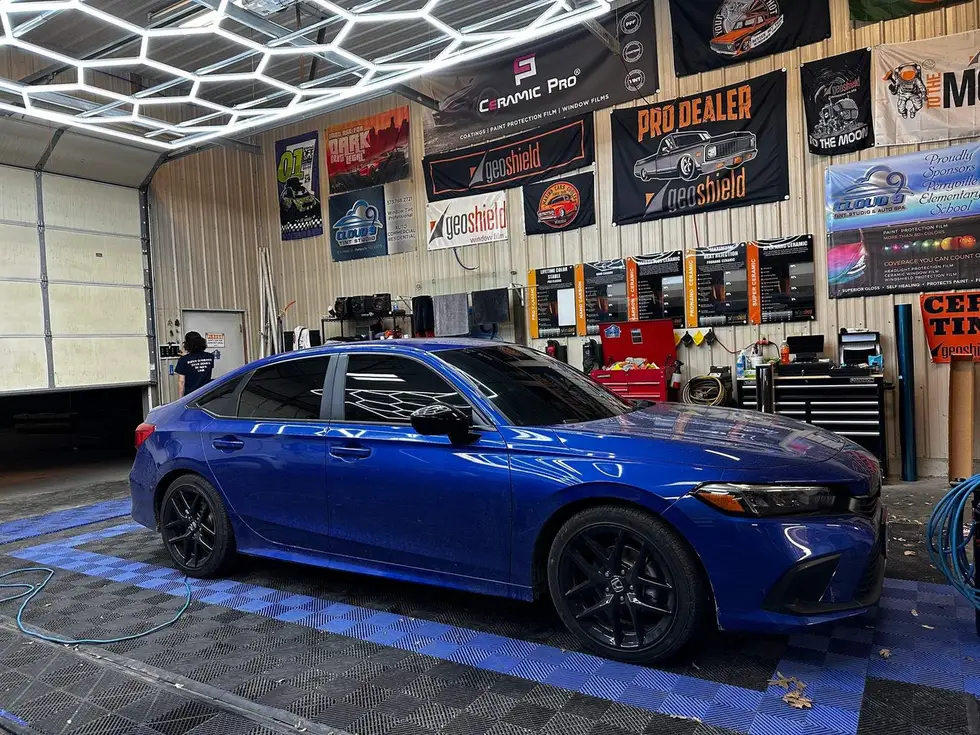
Keep three finish-specific care rules in mind before choosing your film:
- Automatic car wash brushes harm both finishes: Spinning nylon bristles lift exposed film edges and leave dull scuff tracks; hand washing or occasional gentle touchless rinsing protects your investment, provided wash tunnels skip spray-on “hot wax” cycles on matte film.
- Ceramic coating works on both finishes when matched properly: Installing a flexible film-safe ceramic coating over matte PPF deepens color richness slightly and makes bug guts rinse off effortlessly without turning the satin surface glossy.
- Bug acids and tree sap still need prompt rinsing: Missouri summer lovebugs, cicadas, and oak sap left baking on hoods can stain either topcoat over time if ignored for weeks; warm water soaking and pH-neutral bug remover lift residue without scrubbing.
Seeing physical film swatches laid directly over your car’s hood in person makes the visual difference unmistakable.
Compare Gloss and Matte PPF Samples in Perryville, MO
Choosing between invisible high-gloss protection and a bold satin conversion is easiest when you hold both urethane films directly against your vehicle’s paint color under studio and outdoor lighting. Visit Cloud 9 Tint Studio and Auto Spa at 111 S West St in Perryville, MO, call 573-570-4470, or reach out via our contact page to inspect gloss and matte PPF samples, review partial vs. full-body edge wrapping on your model, and build a protection plan tailored to how you drive.
Frequently Asked Questions
Does matte PPF protect against rock chips as well as gloss PPF?
Yes. Quality gloss and matte paint protection films use the same thermoplastic polyurethane core thickness—commonly around 8 mils—so impact absorption against gravel, highway debris, and road salt is identical.
Can matte PPF be applied over factory glossy paint?
Yes. Applying matte or stealth PPF over standard glossy factory paint converts the visual finish into a smooth satin sheen while keeping the original factory clear coat intact and untouched underneath.
Why is matte PPF rarely used for partial front-end packages?
Installing matte film on only the front bumper and hood leaves the doors and rear quarters glossy, creating an obvious two-sheen split unless you are intentionally styling a contrasting matte hood accent.
Does matte paint protection film have self-healing properties?
Modern premium matte PPF includes a textured elastomeric topcoat engineered to self-heal light wash marks with warmth without turning shiny, though deep gouges or abrasive polishing compounds will permanently alter its satin texture.
Can you put wax or gloss detail spray on matte PPF?
No. Carnauba waxes, gloss-enhancing quick detailers, and abrasive polishes fill the microscopic light-diffusing texture of matte film, creating blotchy shiny patches. Use only pH-neutral matte-safe soaps and matte-specific sealants.