
Leasing a vehicle changes the calculus around protecting its appearance in a way owning one outright doesn’t. You’re not just thinking about how the car looks to you day to day: you’re thinking about how it will be evaluated when you hand the keys back, and whether that evaluation could cost you money. Paint protection film comes up often in that context, and whether it’s worth it depends on a handful of specific factors rather than a blanket yes or no at Cloud 9 Tint Studio and Auto Spa.
How Leased Vehicles Are Evaluated at Turn-In
Most leases include an inspection at the end of the term that assesses the vehicle’s condition against what’s considered normal wear and tear. Anything beyond that threshold is typically billed as excess wear-and-tear charges. Exactly where that threshold sits, and how it’s enforced, varies by leasing company and by the specific terms of your agreement, so it’s worth reviewing your lease documentation directly rather than assuming a standard applies universally.
This inspection is often conducted by a third-party evaluator rather than the leasing company itself, and it’s typically scheduled close to your actual return date, which means there’s usually limited time to address anything unexpected the inspection turns up. Some leasing companies offer a pre-inspection a few months before the lease officially ends, giving you a chance to see what might be flagged while you still have time to make decisions about it: checking whether this option exists for your lease is worth doing well before your return date approaches.
For drivers around Perryville, MO, and nearby communities like Cape Girardeau, keeping a leased vehicle in turn-in-ready condition often comes down to protecting against specific regional driving hazards before the lease inspection occurs.
What Kind of Wear Actually Gets Flagged
The kinds of damage most likely to draw attention at a lease-end inspection tend to be the same kinds of damage PPF is designed to help reduce the risk of: rock chips from highway driving, minor scuffs and scrapes, and abrasion from road debris. Deeper dents, mechanical issues, and interior damage are evaluated separately and aren’t something paint protection film addresses at all, so it’s worth being clear that film is relevant to one specific category of potential charges, not a general hedge against every possible lease-end deduction.
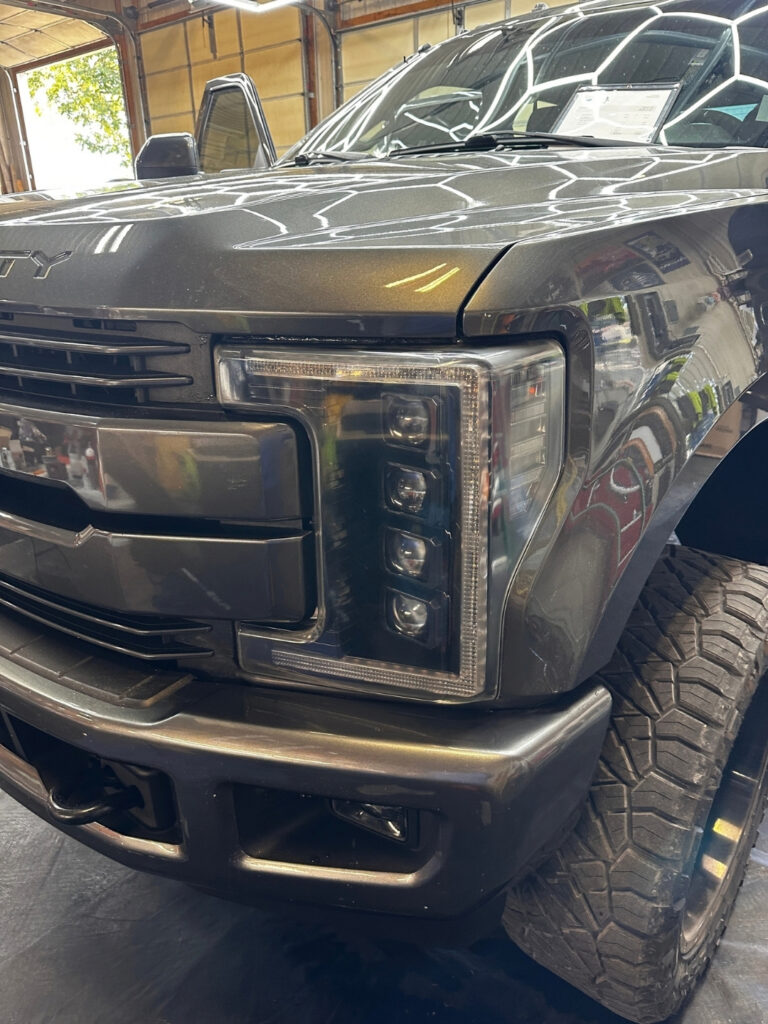
Front-facing panels (the hood, front bumper, mirrors, and lower rocker panels) tend to accumulate this kind of wear fastest, simply because they take the brunt of road debris kicked up at highway speed, which is part of why these areas are often prioritized when owners choose partial rather than full coverage.
Why PPF’s Removability Matters for a Leased Vehicle
One detail that makes PPF particularly relevant for a leased vehicle is that it’s designed to be removed by a professional without damaging the paint underneath it, assuming proper installation and removal. That means film applied during the lease term can generally be removed before the vehicle is returned, if that’s ever necessary or preferred, rather than being a permanent modification to a vehicle you don’t own outright. This is worth confirming directly with whoever installs the film, since removal timing and condition both affect the outcome.
Understanding how caring for your vehicle after paint protection film installation maintains the integrity of the clear film throughout your lease term is essential to ensuring clean, damage-free removal later.
Timing It During Your Lease
When PPF gets applied during a lease term also affects how much value it provides. Installing it early, close to when you first take delivery, protects the vehicle for the full remaining term and avoids any accumulated wear happening before the film goes on. Waiting until closer to lease-end to consider it doesn’t make sense in most cases, since there’s less remaining exposure for the film to protect against, and any wear that’s already occurred won’t be addressed by film applied later. If you’re leasing a new vehicle and already anticipate wanting PPF, applying it early in the term is generally the more practical approach.
Weighing Cost Against a Potential Charge
It’s reasonable to think about PPF as weighing an upfront cost against the possibility of avoiding a wear-and-tear charge later, but this isn’t a precise calculation, since neither the cost of film installation nor the size of any potential lease-end charge can be predicted with certainty in general terms: both depend on your specific vehicle, your specific lease, and the film and coverage you choose.
Rather than treating this as a guaranteed break-even calculation, it’s more useful to think of PPF as reducing the risk and likelihood of certain charges, alongside the other benefits of having a better-protected vehicle to drive for the length of your lease. A direct conversation about your specific vehicle and driving situation will give you a more useful answer than any general estimate could.
Does Careful Driving Make PPF Unnecessary?
Careful driving habits genuinely reduce risk, but they don’t eliminate it entirely. Highway debris, gravel kicked up by other vehicles, and road conditions you don’t control are part of driving regardless of how attentively you drive. PPF and careful driving aren’t competing strategies: they work together, with careful habits reducing how often the film actually gets tested and the film providing a layer of protection for the risks that careful driving alone can’t prevent. Neither one is a substitute for the other.
Weighing the Decision: Questions to Ask Yourself
A few questions tend to matter more than any general rule of thumb:
- How many miles do you expect to put on the vehicle, and under what conditions? A lease with significant highway driving carries more exposure to the kind of road debris PPF is designed to help with than a lease used mostly for short, low-speed trips.
- How long is your remaining lease term? The cost-benefit calculation looks different for someone six months from lease-end versus someone with two or three years remaining, simply because there’s more time for wear to accumulate either way.
- What does your specific lease agreement say about vehicle modifications? Some leases have specific language about aftermarket additions or modifications. Paint protection film is generally considered a protective, non-permanent application rather than a modification, but if you have any doubt, reviewing your agreement or asking your leasing company directly is worth doing before moving forward.
- What’s your driving environment actually like? Gravel roads, highway-heavy commutes, and areas with a lot of active road construction around Ste. Genevieve and Perryville all increase the kind of exposure PPF is designed to help reduce, more so than routine short-distance city driving.
Partial vs. Full Coverage for a Leased Vehicle
For a leased vehicle, the coverage-scope decision often comes down to balancing cost against the areas most likely to be evaluated at turn-in: typically the front end, hood, and mirrors, which take the brunt of highway-speed road debris.
If you haven’t worked through the specifics of what partial versus full coverage actually includes, reviewing partial vs full paint protection film coverage walks through the tradeoffs between partial and full coverage in more depth than makes sense to repeat here.
When PPF May Make Less Sense for a Lease
PPF isn’t automatically the right call for every leased vehicle. It may make less sense if your remaining lease term is very short, if your driving is largely low-mileage and low-exposure, or if your specific lease’s wear-and-tear allowance is generous enough that minor cosmetic issues are unlikely to result in a charge anyway.
It may also make less sense if you’re planning to purchase the vehicle outright at the end of the lease rather than returning it, since at that point the decision becomes less about avoiding a return-condition charge and more about your own long-term ownership preferences, which is a different, though still valid, reason to consider PPF. These are genuinely case-by-case judgment calls that depend on your specific lease terms and driving habits, not something that can be answered the same way for every driver.
If cosmetic maintenance is your primary goal without impact protection, combining routine care or considering auto detailing vs ceramic coating may represent a more aligned alternative for your leased vehicle goals.
What to Discuss With Your Leasing Company Before You Decide
Since lease terms vary so much between leasing companies and even between individual agreements, it’s worth having a few specific conversations before moving forward with PPF on a leased vehicle:
- Ask directly about the wear-and-tear standard used at inspection, and whether there’s written documentation you can review rather than relying on a general description.
- Confirm whether protective, non-permanent applications like PPF need to be disclosed or pre-approved under your specific agreement, even though this is uncommon.
- Ask what happens if the vehicle is returned with PPF still installed, since in most cases this isn’t an issue, but confirming removes any uncertainty.
- Keep documentation of when PPF was installed and by whom, in case it’s ever relevant to a wear-and-tear conversation at return.
None of this is required by every leasing company, but a short conversation upfront tends to prevent confusion or disputes at the point of return, when there’s less flexibility to resolve questions.
Practical Considerations Before You Decide
Factor | Leans Toward PPF | Leans Away From PPF |
Remaining lease term | Longer remaining term | Very short remaining term |
Driving environment | Highway-heavy, gravel, active construction areas | Mostly low-speed, short-distance driving |
Lease’s wear-and-tear allowance | Stricter allowance, higher risk of charges | Generous allowance, lower risk of charges |
Coverage scope needed | Full coverage for maximum protection | Partial coverage on high-exposure areas only |
Frequently Asked Questions
Can paint protection film help avoid lease-end wear-and-tear charges?
It can help reduce the risk of certain kinds of cosmetic damage that might otherwise be flagged at inspection, though it’s not a guarantee against every possible charge, and the outcome still depends on your specific lease’s terms and inspection standards.
Is applying PPF considered a modification under most lease agreements?
It’s generally considered a protective, non-permanent application rather than a structural modification, but lease terms vary, so it’s worth confirming directly with your leasing company if you have any doubt.
Do I need to remove PPF before returning a leased vehicle?
Not necessarily. This depends on your specific lease terms and the condition of the film. If removal is ever needed or preferred, professionally installed and removed film is generally designed to come off without damaging the paint underneath.
Is partial coverage enough for a leased vehicle, or should I get full coverage?
This depends on your driving conditions, remaining lease term, and budget. Partial coverage on high-exposure areas like the front end and mirrors is a common approach, but full coverage may make more sense for longer leases or higher-mileage driving.
Does PPF affect a leased vehicle’s insurance or warranty in any way?
This can vary by insurer, manufacturer, and leasing company, so it’s worth checking directly with those parties rather than assuming one way or the other.
Thinking Through PPF for Your Lease?
If you’re trying to figure out whether paint protection film makes sense for your specific lease and driving situation, contact Cloud 9 Tint Studio and Auto Spa at 573-570-4470, or learn more about Cloud 9’s paint protection film service and the coverage options available.