
The difference between car detailing vs car wash lies in the level of care and thoroughness each provides. While a typical car wash is designed for quick surface cleaning, car detailing involves a meticulous, panel-by-panel approach using specialized tools and products that are safe for your vehicle’s paint and interior materials. Detailing also includes protective treatments that help preserve your car’s appearance and value over time. If your goal is to maintain your vehicle’s condition for the long term rather than just achieve a temporary shine, professional auto detailing is the superior choice.
Introduction
Most drivers learn the phrase car detailing vs car wash the moment a “clean” vehicle still looks tired in sunlight. The two services overlap in one obvious way, they both remove dirt, but their goals, methods, and lasting impact on your vehicle are very different.
If you are booking your first professional auto detail, the best mindset is simple: a car wash is routine maintenance for visible grime; detailing is deeper care aimed at preservation, finish quality, and long-term protection.
Car Detailing vs Car Wash: Understanding the Difference
A car wash is all about speed and convenience, offering a fast way to clear away dust, dirt, and road grime from your vehicle’s exterior. Think of it as a basic upkeep routine—enough to keep your car looking tidy and presentable for daily driving. Whether you opt for an automated tunnel, a self-serve bay, or a quick hand wash, the main goal is to clean the body, glass, wheels, and tires without much attention to detail.
In contrast, car detailing is a far more involved process that elevates vehicle care to a professional level. Detailing is designed to restore and protect your car both inside and out, addressing not just surface dirt but also deeper imperfections like swirl marks, light scratches, and faded trim. Every inch of the vehicle is carefully treated, from deep-cleaning and conditioning the interior fabrics and leather to polishing and protecting the paintwork. This attention to detail ensures your car not only looks its best but is also better protected against the elements and everyday wear.
What a Standard Car Wash Is Built to Do (and Do Well)
A standard wash aims to remove loose contamination: dust, road film, mud, and salt. Many operators do this very efficiently, and for many drivers it is exactly the right cadence.
A typical car wash is designed for efficiency and convenience, providing a quick way to remove surface dirt and grime from your vehicle’s exterior, which highlights the need for more comprehensive exterior cleaning. Automated systems and high-powered washers can clean your car in just a few minutes, making it an ideal choice for busy schedules or routine upkeep. However, while a standard car wash is effective for basic cleaning, it doesn’t address deeper contaminants, paint imperfections, or interior restoration the way professional car detailing does.
After a wash, you can usually expect:
- Cleaner glass and visible surfaces
- Reduced salt and road film
- A quick shine from a drying aid or basic wax
- A reset that makes regular maintenance easier
That is the upside. The limitation is that speed-focused washing cannot spend time on paint decontamination, delicate trim, embedded interior grime, or durable protection. This is where car detailing vs car wash becomes more than semantics.
What Professional Car Detailing Adds That a Car Wash Cannot
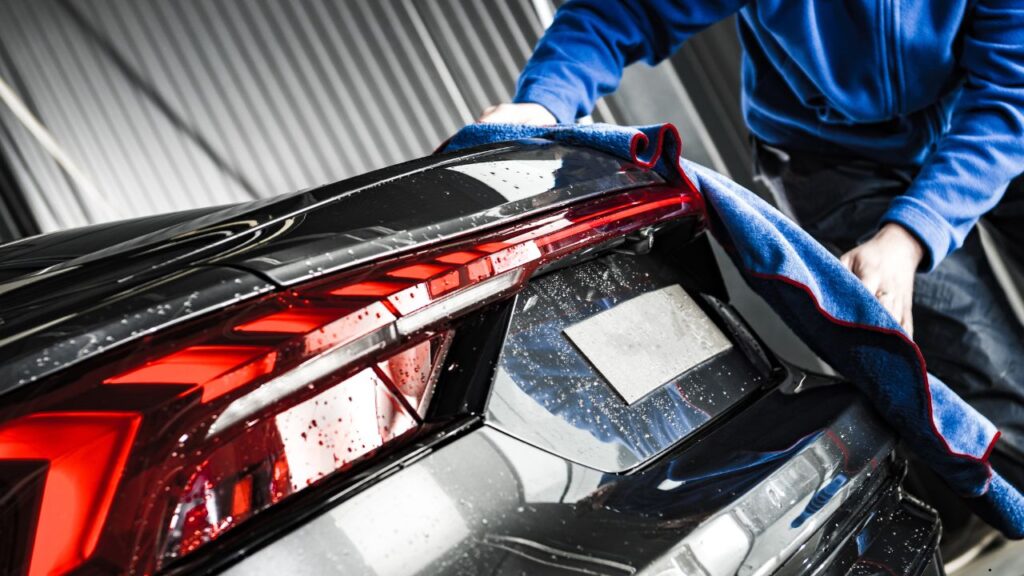
Detailing is a set of processes that are intentionally slower because they are safer and more thorough. A professional detail often includes pre-rinsing and foaming to reduce scratching, hand washing with controlled media (mitts, microfiber), careful drying, and then targeted correction and protection steps.
It also extends well beyond paint. Interior detailing can involve vacuuming, stain treatment, extraction, steam or enzyme cleaning, leather conditioning, and meticulous cleaning of the high-touch zones that make a car feel truly “reset.”
Here’s the difference between car detailing and car wash in practical terms, the scope changes from “remove dirt” to “clean, correct, and protect.”
After a wash-only service, the paint may be clean but still dull. After detailing, the surface can look clearer because bonded contamination is removed and protection layers are refreshed.
Detailing commonly includes:
- Decontamination: Removing bonded grit, tar, brake dust residue, and industrial fallout so the paint feels smooth
- Paint correction: Reducing swirls, haze, oxidation, and light scratches through controlled and polished techniques
- Interior restoration: Stain and odor treatment, deep cleaning of textured plastics, and fabric or leather care
- Protection: Wax, sealant, or ceramic coatings to reduce future bonding and make routine washes safer
This is why the phrase car detailing vs car wash matters when you are trying to protect resale value, keep a dark color swirl-free, or recover an interior from kids, pets, or commuting.
Exterior Detailing: Paint-Safe Technique Beats Speed Every Time
Modern automotive paint is thin by design, and that shapes how careful exterior work needs to be. Clear coat is not an infinite resource, and aggressive polishing or harsh chemicals used repeatedly can shorten the life of the finish.
A useful consideration for car owners is that regular, gentle maintenance can significantly extend the life and appearance of your vehicle’s surfaces. Using proper washing and detailing techniques helps prevent scratches, swirl marks, and premature wear on both the exterior paint and interior materials. Investing in professional care not only keeps your car looking its best, but also helps maintain its value and protects it from the effects of daily driving and environmental exposure.
Exterior detailing often includes steps that are rare in a standard wash:
- Pre-wash and contact wash designed to reduce scratches Foams and pre-rinses help loosen grit so it is not dragged across paint during contact washing.
- Chemical decontamination Iron removers help dissolve embedded ferrous particles, especially on light-colored paint and behind wheels.
- Mechanical decontamination (clay or synthetic media) Removes bonded contaminants that remain after chemicals, creating a smooth surface that reflects light more evenly.
- Polishing (if needed) Polishing can increase gloss by reducing micro-marring and oxidation, leaving a polished surface that can improve clarity in direct sun and under streetlights.
Many first-time customers are surprised that detailing can take hours even on a “clean” car. The time is not just cleaning, it is inspection, safe technique, and careful finishing.
Interior Detailing: It’s Not “Vacuum and Wipe”
A basic interior wipe-down can make a car look acceptable. Detailing is what makes it feel genuinely clean, especially in the seams and surfaces you touch every day.
Interior materials are also easy to damage. Shiny, streaky dashboards and dried-out leather often come from the wrong cleaner, the wrong towel, or the wrong amount of product. Detailers choose chemistry and tools based on the surface: pH-balanced cleaners for many fabrics, dedicated leather cleaners and conditioners when appropriate, and low-residue approaches for screens and glossy trim.
Even odor has a process. Masking sprays cover smells; deep interior work aims to remove the source, which might be bacteria in spilled drinks, pet oils in fabric, or residue in floor mats.
If you want a strong environmental reason to avoid driveway-style rinsing and runoff while you clean, the U.S. Environmental Protection Agency explains that stormwater can carry pollutants into local waterways, and washing activities can contribute when soap and grime enter storm drains EPA stormwater resources. Many professional facilities are built to manage water and wastewater more responsibly.
Protection: Why Detailing Lasts Longer Than a Wash
A wash can add short-lived gloss with a drying aid or quick wax. Detailing focuses on protection that actually changes how the vehicle behaves after you drive it.
Protection makes surfaces harder for dirt to bond to, so future washes are easier, safer, and enhance the longevity of your vehicle’s finish. It also adds a sacrificial layer between your paint and the environment.
Common protection options include:
- Carnauba wax (warm look, shorter durability)
- Synthetic sealants (longer-lasting, often glossier)
- Ceramic coatings (highest durability, but prep work matters)
A key idea for beginners: the product matters, but prep matters more. A durable coating applied over contamination or old residues will not perform the way you expect. Detailing spends time preparing the surface so protection can bond properly.
A helpful tip from industry experts is to match your car care routine to your driving habits and environment. For example, if you frequently drive in areas with heavy road salt, pollen, or tree sap, you may need to wash and detail your car more often to prevent long-term damage. Likewise, vehicles parked outdoors or used for commuting tend to accumulate more contaminants and benefit from regular professional attention. Tailoring your maintenance schedule ensures your car stays protected and looking its best year-round.
The Tools and Products Are Different, and the Results Show It
Part of the conversation around car detailing vs car wash is labor, but another part is tooling. A standard wash often relies on automated equipment or quick hand methods. Detailing frequently uses specialized machines, lighting, towels, pads, and measuring tools.
Here is a practical comparison you can use when evaluating services:
| Area | Standard wash focus | Professional detailing focus | Why it matters |
| Paint contact | Fast removal of visible dirt | Safe wash methods, controlled contact | Reduces wash-induced swirls |
| Contamination | Mostly ignored | Chemical + mechanical decon | Paint feels smooth, reflects better |
| Correction | Not included | Polishing/compounding when needed | Restores clarity and gloss |
| Wheels/tires | Quick clean | Deep wheel cleaning, tire dressing | Brake dust and browning are stubborn |
| Interior | Vacuum + wipe | Extraction, steam, stain treatment | Removes embedded soils and odors |
| Protection | Short-term shine | Sealants/coatings with proper prep | Longer-lasting, easier maintenance |
This is why people comparing car detailing and car wash often feel sticker shock until they see the process. One is closer to a rinse and reset; the other is closer to cleaning plus surface care.
Cost, Time, and How Long the Results Tend to Last
A wash is priced for frequency. Many drivers wash weekly or biweekly because it is quick.
Detailing is priced for transformation and preservation, resulting in a polished finish. It can take half a day or more, depending on paint condition, interior needs, upholstery cleaning, and whether polish or correction is included.
It helps to think in outcomes rather than line items:
- Appearance: washes improve “clean”; detailing improves “finish quality”
- Longevity: a wash is temporary; detailing builds protection and easier maintenance
- Risk: rushed contact can add micro-marring; careful technique reduces it
If you are weighing car detailing vs car wash for the first time, ask one question: “Do I want it to look clean, or do I want it to look corrected and stay easier to clean for months?”
Many owners use both. A good plan is regular washes to prevent buildup, with periodic detailing to reset and protect, often incorporating paint protection film for enhanced surface durability.
This is also where the phrase car detailing vs car wash becomes less of a debate and more of a schedule: wash for upkeep, detail for restoration and protection.
Before you book, it helps to clarify your goal and communicate it clearly:
- Daily driver upkeep: choose a quality wash plan and keep it frequent
- Resale prep: book a detail with interior restoration and paint enhancement
- Post-winter cleanup: prioritize decontamination, wheel wells, and protection
- New-to-you used car: start with a full interior and exterior detail to reset it
If a shop explains process, risks, and realistic outcomes, you are in good hands. If it promises perfection in 30 minutes, that is usually not the service level most people expect when they are truly comparing car detailing and car wash.
And if you ever forget the vocabulary, just return to the simple definition: the difference between car detailing and car wash is that detailing cleans deeper, uses paint-safe technique, restores surfaces, and adds protection that changes what your next few months of ownership will feel like.
When Should You Choose a Car Wash?
A car wash is the right choice when your vehicle simply needs a quick refresh—such as after driving through rain, dust, or muddy roads. It’s a practical and budget-friendly way to keep your car looking presentable between more thorough cleanings. If you’re heading out for a routine errand, a casual outing, or just want to maintain your car’s appearance without spending much time or money, a standard wash is ideal. For those concerned about paint safety, a touchless or hand wash can help avoid the risk of scratches from automated brushes.
When Is Car Detailing the Best Choice?
Car detailing is the preferred option when your vehicle needs more than just a surface clean. If it’s been several months since your last deep cleaning, or you’re getting ready for a road trip, selling your car, or returning a lease, detailing delivers the comprehensive care your car deserves. Choose detailing if you’re dealing with stubborn interior stains, lingering odors, pet hair, or if you’ve noticed swirl marks, dull paint, or water spots on the exterior. When weighing car detailing vs car wash, remember that detailing is an investment in your vehicle’s long-term appearance and protection.
How Often Should You Wash or Detail Your Car?
Washing: For optimal cleanliness and to protect your vehicle’s finish, it’s best to wash your car every one to two weeks. This routine helps remove road grime, dust, and contaminants that can build up quickly, especially if you drive daily or park outdoors.
Detailing: A full professional detail is typically recommended every four to six months, but the ideal frequency depends on factors like how often you drive, the climate you live in, and whether your car is stored in a garage or exposed to the elements. While regular washing keeps your car looking fresh, detailing is a more intensive maintenance step that restores and protects both the interior and exterior. Scheduling a detail two to three times a year, or before special occasions, ensures your vehicle stays in top condition and maintains its value.
Why Choose Professional Car Detailing at Cloud 9 Tint Studio & Auto Spa?
Choosing professional car detailing at Cloud 9 Tint Studio & Auto Spa means entrusting your vehicle to experts who are passionate about automotive care. Our team uses industry-leading tools, premium products, and meticulous techniques to deliver results that far surpass what a standard car wash can achieve. At Cloud 9, we don’t just clean your car—we restore, protect, and enhance every surface, inside and out.
Whether it’s removing stubborn stains, correcting minor paint flaws, or applying advanced protective coatings, our specialists tailor every service to your vehicle’s unique needs. We pay close attention to the details that matter, from deep-cleaning interiors to rejuvenating exterior finishes, ensuring your car leaves our studio looking and feeling its absolute best. When you compare car detailing vs car wash, the difference is clear: Cloud 9 Tint Studio & Auto Spa offers long-term value, superior protection, and a level of care designed to keep your vehicle in pristine condition for years to come.
How to Get Started
Getting started with professional detailing at Cloud 9 Tint Studio & Auto Spa is all about choosing the right level of care for your vehicle. Our experts begin by evaluating your car’s condition, usage, and specific needs to recommend the most effective detailing package—whether you’re looking for a deep interior clean, exterior paint correction, or advanced protection like ceramic coating.
We use specialized equipment and premium products to treat every surface with precision, ensuring your car receives the attention it deserves from top to bottom. With professional detailing, you’ll notice a dramatic improvement in your vehicle’s appearance, longer-lasting protection, and greater overall value. For drivers in Perryville, MO, Cloud 9’s detailing services make it easy to keep your car looking and performing its best, no matter what the road brings.
Visit at:
Cloud 9 Tint Studio and Auto Spa
111 South West St, Perryville, MO 63775
Check works at:
cloud9tintstudioandautospa.com
Call at: 573-570-4470
Social Profile:
Facebook
Instagram
Selecting a professional auto detailing package ensures your vehicle gets thorough cleaning, restoration, and lasting protection.
Easy Ways to Get Started
- Book Now – Explore our professional auto detailing packages and schedule services customized to your vehicle’s size, condition, and specific care requirements.
- Call Now – Book your appointment at a time that works best for you.
Recommended Articles for You
How Auto Detailing Improves Your Car’s Overall Safety
What to Expect for First-Time Professional Car Detailing